
Apple Pay at New Zealand Sports Betting Sites in 2026: What Works, What Costs, and What’s Lawful
 Available in US
The quick version: in New Zealand the only bookmaker lawfully taking online sports and racing bets from a person in this country is TAB NZ, and its two online brands are TAB and Betcha. Apple Pay is a deposit method on neither of them. Bettors who want Apple Pay at the cashier have to look at overseas operators, and that is exactly where the law, the protection and the payout story change.
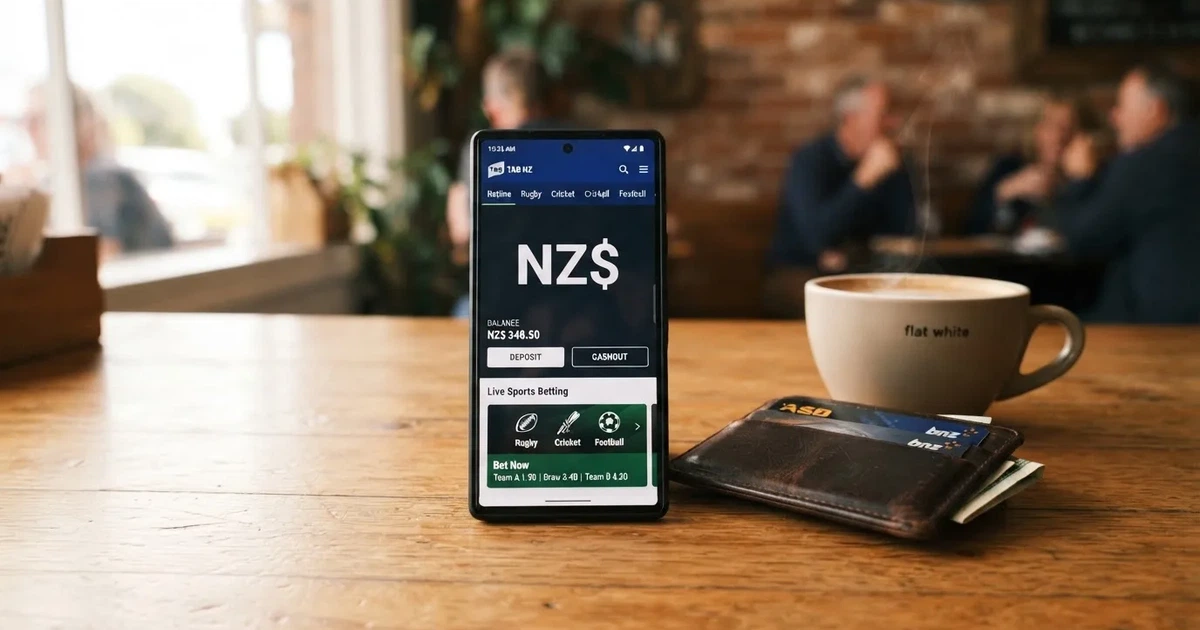
This page is current as of 26 October 2026, verified against TAB NZ’s published terms and the Department of Internal Affairs’ statements on the Racing Industry Act 2020 amendment. The page works through how Apple Pay deposits and withdrawals actually run, lays out the landscape of who accepts the wallet and who does not, sorts the legal position from the practical one, and names the safer-gambling tools a New Zealand punter actually has access to.
Table of Contents
- The cashier layer: Apple Pay as a sportsbook payment method
- The landscape: who in fact accepts Apple Pay
- How the bookmakers stack up
- The fundamentals: how Apple Pay betting works end to end
- The fundamentals: what a punter needs to start
- The legitimate path: TAB NZ and the Racing Industry Act 2020
- The legal frame: tax, advertising, and the operator side
- The legal frame: payments and what the law does not say
- Responsible gambling in New Zealand: the tools that are here
- Operator reviews
- How the wallet sits against the legal frame
- What the cashier comparison really costs
- The banking frame
- The market in 2026: what’s changing, what isn’t
- The takeaway for a New Zealand punter
- What the page does not do
- Frequently asked questions
The cashier layer: Apple Pay as a sportsbook payment method
What Apple Pay is on a betting site
Apple Pay is a wallet layer, not a bank account. When a punter taps Apple Pay at a betting site’s cashier, the wallet passes the charge through to a card the punter already has on file — Visa, Mastercard, sometimes American Express, depending on which issuer has signed up. The bookmaker never sees the real card number; it receives a device-specific tokenised number plus a one-time security code generated for that transaction. That design is what makes Apple Pay attractive on a phone: the punter does not type a 16-digit PAN, an expiry date or a CVV into a betting form, and the merchant does not store the underlying card.

For a punter, this changes three things that matter on a betting site. First, it removes the typing of card details on a phone keyboard, which means fewer typos and fewer wrong-card mistakes on a Sunday-afternoon multi. Second, it puts Face ID or Touch ID between the bet and the money, so a lost phone is not a leaked card. Third, it keeps the card number out of any data the bookmaker holds, which matters less on a regulated site and a lot more on one that is not.
Apple Pay is developed and operated by Apple Inc. and launched on 20 October 2014, initially supporting only US-issued payment cards. Apple Pay began supporting UK-issued payment cards on 14 July 2015. The wallet now works across dozens of markets, but Apple itself states that Apple Pay is not available in all markets and that a supported card from a participating card issuer is required. A punter whose bank has not signed up cannot use Apple Pay at all, no matter what the betting site says.
How the cashier flow actually runs
On an iPhone with Face ID the punter double-clicks the side button to authenticate an in-store Apple Pay purchase; on a Touch ID model the same gesture is a double-click of the Home button. Inside a betting app the flow is shortened to a single Apple Pay confirmation sheet, with the punter authenticating via Face ID, Touch ID or the device passcode. The punter chooses Apple Pay in the cashier, the wallet pops up with the default card, Face ID authorises, and the deposit lands.
In-store Apple Pay payments depend on near-field communication to talk to a contactless terminal; inside an app, NFC is not involved — the wallet talks to the app over Apple’s own in-app payment channel. That distinction matters because some betting apps surface Apple Pay only when the punter is on iOS Safari or inside the native iOS app; on Android Chrome at the same site, Apple Pay is absent, by design. The wallet does not cross platforms.
Deposits and what they cost
On the offshore brands that list Apple Pay, the punter is funding the betting account from a debit or credit card the bank has already issued, so the cost profile is the card’s cost profile. Most debit cards linked to a New Zealand bank account will pass through without surcharge at the cashier; a few issuers treat gambling transactions under their cash-advance or credit-card rules, in which case interest starts running from the day of the deposit and a cash-advance fee may apply. The punter’s bank, not the betting site, decides that. There is no Apple Pay fee on top. The same goes for refunds: a cancelled deposit goes back through the wallet to the underlying card.
That is also where the limit story sits. Because the deposit is a card transaction, it is bounded by the card’s daily and per-transaction maximums — usually far higher than any betting site’s minimum deposit — and by the punter’s available cleared funds. Apple Pay does not extend credit; it cannot make a deposit the card cannot make on its own.
Withdrawals: the part that disappoints
Apple Pay is an outgoing-only rail on most betting sites. The bookmaker takes Apple Pay deposits, but returns the money by bank transfer, by the underlying card, or by a withdrawal method the punter sets on the account. A punter who tops up with Apple Pay and expects Apple Pay back usually does not get it. Where the bookmaker does push withdrawals to Apple Pay, the flow is the same Face ID / Touch ID prompt as on the way in.
The timing belongs to the underlying rail, not to the wallet. A Visa or Mastercard push to Apple Pay settles in one to three banking days; a bank transfer is one to five; an e-wallet that sits behind Apple Pay can be under an hour. Anything the bookmaker calls “instant” is instant against its own ledger, not against the punter’s bank statement. A punt on Saturday and a payout requested Sunday morning generally clears Tuesday or Wednesday at the underlying card. That is fine for most punters and wrong for anyone who needs the money on Sunday night.
The landscape: who in fact accepts Apple Pay
New Zealand-licensed brands, here meaning TAB NZ’s two online brands TAB and Betcha, list Visa, Mastercard, bank deposit, POLi and the in-app wallet top-up. Apple Pay is not in that published set. TAB NZ’s own description of its deposit methods shows cards are accepted directly, not through Apple Pay; POLi covers the bank-to-account path. A New Zealand punter looking for Apple Pay at the cashier as a result does not find it through the lawful route.
Overseas operators are a different matter. A long tail of Curaçao-licensed sportsbooks and crypto-led brands lists Apple Pay at the cashier as a deposit method, alongside Visa, Mastercard and a dozen coins. The wallet usually appears with a “deposit” button rather than a “withdraw” one, and the listed minimum is set against the card underneath, not against the wallet itself. Rooster, by way of example, takes card deposits by Visa and Mastercard with a 20 €/$ minimum, instant processing and no fees, and card withdrawals take 1-3 banking days. Apple Pay, where it appears on such a brand, is just another way of running the same Visa or Mastercard rail.
Two caveats travel with every offshore brand. The first is jurisdictional. The brand may not name New Zealand as a market it serves; it may quietly permit sign-ups from a New Zealand address and depend on the punter to be the gatekeeper. The second is the payout ceiling. A small sportsbook that takes NZ$10 or NZ$20 in Apple Pay may have no New Zealand-friendly withdrawal method at all, and the winnings may be paid back to the same card with a fee, a long queue, or a per-week cap. The deposit is frictionless; the payout is not.
What the cashier choice means for the punter
Picking Apple Pay is not a decision about who to bet with. It is a decision about how to fund the account and, secondarily, how the winnings come back. A punter who wants a frictionless top-up and is comfortable with the bank transfer or card return pays nothing to use Apple Pay; a punter who needs the winning to land back on the same wallet to the same card has to check the withdrawal page before the first deposit. That page is more honest than the deposit page.
The other thing the cashier choice dictates is the daily rhythm of betting. An Apple Pay deposit is a one-tap top-up that the punter does not need to plan; a bank-transfer withdrawal is a same-day or next-day rail that the punter needs to put on a calendar. For a casual punter with a small budget and no weekly cashout, this difference is invisible. For a punter who plans to withdraw regularly, it is the central choice, not the deposit.
How the bookmakers stack up
The comparison below lists the three operators in scope. Two are New Zealand-licensed brands run by TAB NZ. The third is an overseas operator — Rooster — that lists a Visa/Mastercard rail the punter can reach through Apple Pay.
| Brand | New Zealand status | What the operator’s own terms say on the cashier and the rail |
|---|---|---|
| TAB | TAB NZ brand (one of two online brands of TAB NZ, the only provider lawfully offering racing and sports betting to people in New Zealand) | TAB NZ’s deposited funds are held in a simplified wallet inside the app; deposit methods are limited to bank deposit, debit and credit card, POLi and the in-app top-up; Apple Pay is not listed; withdrawals back to the original payment method |
| Betcha | TAB NZ brand (one of two online brands of TAB NZ, the only provider lawfully offering racing and sports betting to people in New Zealand) | Same TAB NZ wallet and cashier as TAB; deposit methods mirror TAB; Apple Pay is not listed; withdrawals back to the original payment method |
| Rooster | Not licensed in New Zealand | Card deposits by Visa and Mastercard with a 20 €/$ minimum, instant, no fees; card withdrawals 1-3 banking days; the operator holds a Tobique Gaming Commission e-gaming licence, which gives no right to take bets from people in New Zealand |
Two things stand out from a side-by-side read. First, the lawful New Zealand brands do not list Apple Pay, and the punter looking for the wallet at the cashier is pushed offshore by design, not by accident. Second, the terms of the lawful brands are aligned across TAB and Betcha, because they are the same wallet: a single TAB NZ account can be reached through two front doors, and the cashier is one cashier. Betcha is not a rival bookmaker to TAB. It is the same product with a different wrapper, which is what the section on legality spells out.
Rooster is in scope because its terms show the Visa and Mastercard rail, and Apple Pay sits on top of that rail, and because a New Zealand punter searching for “Apple Pay sports betting” will meet sites like it. The entry makes the absence explicit: an overseas-licensed brand does not bring New Zealand protection with it.
The fundamentals: how Apple Pay betting works end to end
The on-device side
The punter adds a card to Apple Wallet once. The card is verified by the punter’s bank; some banks require an SMS or in-app confirmation, others turn it on instantly. From there the punter does not re-enter the card at any sports betting site. Each transaction carries its own dynamic security code, generated on the device, in addition to the device-specific tokenised number. The actual card number sits behind that token; a merchant breach on a betting site that takes Apple Pay exposes tokens, not card numbers.

For punters, the practical consequence is biometric. Face ID or Touch ID has to authorise the deposit, and the device locks out after repeated failures. Apple Pay itself does not impose a per-transaction cap on a betting deposit — that limit belongs to the underlying card or the merchant’s own settings — but a punter who wants a hard ceiling can set the wallet to require a passcode on every transaction rather than using Face ID alone.
The merchant side
On the bookmaker’s side, the integration is conventional. The cashier holds a merchant token in Apple Pay’s developer framework; the punter’s wallet exchanges that token for a payment authorisation from the card issuer; the funds settle over the existing card rails. The bookmaker does not have to maintain a card vault in the strict sense, because the wallet handles the card data; it does have to maintain a Pay-acquiring relationship, which is why smaller offshore brands sometimes list Apple Pay only after months of being live, and why some that take Visa directly do not take Apple Pay at all.
There is no separate “Apple Pay ledger” on the betting account. The deposit appears on the punter’s balance as a card deposit; the cashier just labelled it Apple Pay for the duration of the authorisation. A punter looking at the betting site’s transaction history sees a card-issued credit and a bookmaker-side reference; looking at the bank statement, they see the card transaction with the merchant name on it.
The settlement side
Cards clear through the bank rails. On a New Zealand-issued Visa or Mastercard the deposit hits the punter’s account immediately and the bookmaker’s account within one or two banking days; the punter’s betting balance updates at authorisation, which is what most punters actually care about. A withdrawal reverses the path: the bookmaker pushes funds to the card issuer, the issuer posts them, the wallet posts them, and the punter sees them in their statement. Each hop adds a step on a calendar.
The point is that “Apple Pay” is not a settlement network. It is a way of pushing a card instruction through a wallet, with a token in place of the PAN. Anyone who tells a punter that Apple Pay is faster than a card is marketing the same rail twice.
The fundamentals: what a punter needs to start
A punter needs four things to use Apple Pay at a sports betting cashier. They need an iPhone, an iPad or a Mac with a Touch ID-equipped Magic Keyboard running Safari; the wallet only runs on Apple devices. They need a card added to Apple Wallet, from an issuing bank that has signed up to Apple Pay — not every New Zealand bank has, and not every Visa and Mastercard has. They need a betting account at a site that has integrated Apple Pay at the cashier. And they need an accepting environment — iOS Safari, the native iOS app — because the wallet does not appear on a desktop browser running on a Windows PC or inside a non-Apple browser.
Where one of these is missing, the punter either sees a different wallet (Google Pay or Samsung Pay at the same brand) or sees no wallet at all and falls back to manual card entry. There is no workaround: the wallet is device-locked, issuer-locked and merchant-locked. A punter who has all four gets a one-tap deposit; one missing element removes Apple Pay from the equation entirely.
The biometric step matters more than the technology. Apple Pay protects card data through tokenization, replacing the actual card number with a device-specific tokenised Device Primary Account Number and generating a dynamic security code for each transaction, so the punter is not typing a card into a betting form, and the merchant is not holding one. For a punter who bets on shared devices, on a working trip, or in a household where the phone is not always the punter’s alone, that biometric step is the part of Apple Pay that does the heavy lifting.
The legitimate path: TAB NZ and the Racing Industry Act 2020
How the monopoly works in law
The Racing Industry Act 2020, as amended by the Racing Industry Amendment Act 2025, inserted section 74AAA. The section says no person other than TAB NZ may offer racing betting, sports betting or other racing or sports betting to a person in New Zealand, regardless of where that person is resident or incorporated. The change took effect on 28 June 2025, and the Department of Internal Affairs told providers serving New Zealand to withdraw with immediate effect. Since then, TAB NZ has been the only provider lawfully offering racing and sports betting to people in New Zealand.
That word “lawfully” is doing the work. The Racing Industry Act does not geo-block offshore websites; the prohibition runs at the operator. The Online Casino Gambling Act 2026 licenses online casino gambling only and does not license sports betting, and TAB New Zealand winning the right to apply for a casino licence does not extend the betting monopoly. Greyhound racing is closing in stages from 1 August 2026, and from that date offshore operators may not take bets on greyhound races either.
There is no licensing route for another bookmaker and no licence register for betting, because there is only one lawful operator. The Department of Internal Affairs is the gambling regulator under the Gambling Act 2003 and monitors compliance with the betting prohibition under section 92A of the Racing Industry Act 2020. A brand listed in an overseas register — Curaçao, Malta, the Tobique Gaming Commission — is not licensed to take bets from a person in New Zealand, no matter how that register phrases it.
TAB and Betcha as one operator, not two
TAB and Betcha are the two online brands of TAB NZ. TAB NZ’s partner Entain runs the TAB business under a 25-year agreement signed in 2023. The deal gives Entain a 50/50 share of gross profits, with at least NZ$150m a year going to TAB NZ for the first five years, and Entain pledged a one-off NZ$100m payment to the racing sector. Bettors see a TAB app and a Betcha app; the racing-data integration, the safer-gambling tools and the cashier are the same.
The relevant consequence for the punt on Apple Pay is that the cashier is not duplicated by brand. A punter with a TAB account and a Betcha account is carrying two logins to one wallet; the deposit methods on each are the published TAB NZ methods. An Apple Pay button does not appear because the underlying integration is not there. To the punter that wants the wallet, the message is simple: the lawful New Zealand sportsbooks do not take Apple Pay, and looking elsewhere takes them outside the lawful path.
What the law does to a player, and what it does not
Section 19(4) of the Gambling Act 2003, inserted in 2025, says an individual may not be convicted for placing a bet with an offshore betting operator in breach of section 74AAA; no source states a penalty for a player. The law targets the operator; DIA’s published warning to players centres on the consequences of dealing with an offshore brand. The Department warns that overseas operators may be in jurisdictions with minimal consumer safeguards, may not return unspent credits and may not pay out large wins. That is the practical framework: a New Zealand punter can place a bet with an offshore brand, but the protection is what that brand chooses to offer, and the recourse is what that brand’s regulator chooses to enforce.
The accurate framing for a reader is the one TAB NZ holds out: the only lawful option for online sports and racing betting in New Zealand is TAB NZ’s two brands, with New Zealand harm-minimisation tools, regulator oversight and a complaints framework. Offshore is unlawful for the operator to serve New Zealand, with no New Zealand complaints route, no local harm-minimisation regime and the risks DIA has named. Neither is “the safe choice” by default. The reader picks, and the reader carries the consequences of that pick.
Bonuses and advertising
TAB NZ runs “bonus bets” promotions; no New Zealand rule on bet-bonus size or wagering terms was found, so what a TAB NZ promotion costs the punter is set by the operator’s terms alone. The Advertising Standards Authority’s Gambling Advertising Code applies to betting advertisements: ads must not target children (under 14) or young people (14 to under 18), judged by context, appeal and expected audience (25% or more of the audience counts as significant where accurate data exists), must not encourage harm, and must be truthful with terms available. No New Zealand equivalent of a “whistle-to-whistle” ban for betting was found.
The prohibition under section 74AAA is read by the Department of Internal Affairs as covering both offering and taking such bets for another operator, so the lawful advertising set inside New Zealand is narrower than the market a punter sees when they read overseas review sites. None of this changes what a punter’s wallet can do. It does change which brands are entitled to send a deposit bonus to a New Zealand address.
The legal frame: tax, advertising, and the operator side
What a New Zealand punter owes
Inland Revenue guidance says recreational gambling winnings are generally not taxable, and prize money from TAB horse, dog and trotting races is not taxable. A person who bets as a business is a different case, and the right answer there is to consult Inland Revenue or an accountant. For the reader who bets occasionally, the headline is that no tax line appears on the bettor’s return. The tax treatment is not the reason most punters lose money, and it is not a reason to switch brands.
On the operator side, TAB NZ pays the Problem Gambling Levy of 0.74%, in force from 1 July 2025 to 30 June 2028. Overseas operators supplying New Zealand residents pay online gambling duty — 12% of profits since 1 July 2024, rising to 16% from 1 January 2027 — but a duty being payable does not make an offer lawful. The point-of-consumption charge on offshore racing and sports bets ceased on 30 June 2026.
What a punter can advertise to, and be advertised to
The Advertising Standards Authority’s Gambling Advertising Code is the advertising frame. Ads must not target children, judged by audience profile; must not encourage harm; must be truthful; and must have terms available. The Department of Internal Affairs’ prohibition on unauthorised betting extends to the promotion of unauthorised betting in New Zealand, which is why a New Zealand punter may see fewer sportsbook ads in the local media than they see on overseas review sites. None of this lands on the cashier. The cashier accepts the deposit that a punter walked in to make.
For punters who advertise bets themselves — a tipster account, a paid picks service — the code applies to them too. A social media post that names a TAB NZ market and a price is allowed; the same post pointing a follower to an offshore account is read as promoting unauthorised betting. That frame does not often come up in a punter’s normal week, and it matters more than it looks the week it does.
The legal frame: payments and what the law does not say
There is no statutory payment rule for betting accounts in New Zealand — no rule on card, bank, credit, prepaid, or crypto. TAB NZ’s deposit methods and limits are operator-level and come only from its terms. No payment-blocking order or bank obligation was found. Nothing states a rule on crypto or VPN use. The only payment-conditioned rule that bites is account opening: a TAB NZ account needs a verified New Zealand address and ID.
A punter who wants Apple Pay at a TAB NZ cashier is asking for a feature that the lawful operator has not integrated. A punter who wants Apple Pay at any sportsbook cashier and is willing to take an offshore brand is using a wallet over an underlying card, and the underlying card’s bank owns the consumer-protection story. Banks do not block gambling transactions on policy grounds in New Zealand as they have in some markets, and the punter’s bank may treat a gambling transaction as a cash transaction rather than a purchase; that decision is the bank’s.
DIA warns that overseas operators may not return unspent credits and may not pay out large wins. The warning is practical, not statutory, and the only enforceable protection a New Zealand punter has against an offshore brand is what that brand’s regulator enforces. A punter who funds an offshore account with Apple Pay is, in plain language, paying a Visa or Mastercard charge into a brand the New Zealand regulator is not auditing.
Responsible gambling in New Zealand: the tools that are here
The safer-gambling set TAB NZ publishes
TAB NZ’s app lists deposit limits, time-outs and self-exclusion among its safer-gambling tools. The exclusion applies across the TAB NZ brands — TAB and Betcha — so a punter who self-excludes from one excludes themselves from both with a single setting. Deposit limits are set by the punter in dollar terms; time-outs are short-term pauses; self-exclusion is a longer-term block. The framework is operator-level, not national.
The age for TAB NZ betting is 18; betting under 18 is an offence under section 89 of the Racing Industry Act 2020. Land-based casinos in New Zealand are 20 — the casino age and the betting age are different, and they stay different. TAB NZ must keep the risks of problem and underage gambling minimised, and pays the Problem Gambling Levy of 0.74%. The levy funds harm-minimisation services; it does not fund a register a punter can self-exclude into across multiple brands.
The national help frame
Help lines are public and free. The Gambling Helpline runs on 0800 654 655 and on the text line 8006. Safer Gambling Aotearoa is the national body coordinating harm-minimisation services. A punter who wants a single phone call rather than an in-app toggle starts at the helpline. The helpline is independent of TAB NZ and of any operator; the conversation is not on the punter’s betting account.
There is no single national online-betting exclusion register in New Zealand. The register the Online Casino Gambling Act 2026 will require is for online casinos only, not for sports betting. The asymmetry matters because a punter with a betting problem can self-exclude from TAB NZ’s two brands together, but cannot use a single register to block all betting brands at once. The offshore brands a punter might also use are outside the New Zealand register, and a punter who chooses offshore is choosing a frame that runs on the operator’s own settings, not on a national one.
What that means for a punter who wants out
A punter who wants out of New Zealand-licensed betting sets the limits on a TAB NZ account or self-excludes through the TAB NZ app. The setting is the only one that does the job for both TAB and Betcha at once. A punter who also has open accounts on offshore brands has to set the limit on each, on each brand’s own terms. The work scales with the brands; the responsibility does not.
The helpline is the route that does not require scaling. The Gambling Helpline and Safer Gambling Aotearoa work independently of any betting brand, and a punter who calls once is talking to a service that does not require an account.
Operator reviews
TAB
TAB is the larger of TAB NZ’s two online brands and the one most New Zealand punters meet first. The cashier takes bank deposit, debit and credit card, POLi and the in-app wallet top-up; Apple Pay is not among them. The published deposit methods are limited, and the punter who wants a card-and-wallet flow is told, in plain terms, that the lawful route is not the wallet route.
TAB NZ’s partner Entain runs the TAB business under a 25-year agreement signed in 2023. The deal gives Entain a 50/50 share of gross profits, with at least NZ$150m a year going to TAB NZ for the first five years, and Entain pledged a one-off NZ$100m payment to the racing sector. The partnership structure explains the depth of the product — fixed-odds and tote betting on racing, a full sportsbook on the major codes — and it explains why a punt who wants an Apple Pay button on top of a Visa token is asking a brand that did not integrate it.
The app lists racing form, Blackbook, Jockey Challenge, Trackside live race streaming with in-app betting and a simplified wallet for deposits and withdrawals. The safer-gambling set sits alongside the wallet — deposit limits, time-outs and self-exclusion — and the helpline numbers are visible in the app. The TAB NZ product is the deepest racing and sports betting product lawfully available in New Zealand, and the cashier is the cashier of one operator group.
For a New Zealand punter who wants the lawful product and is willing to fund it through bank deposit, card or POLi, TAB is the answer. For a punter who has decided that Apple Pay is non-negotiable, TAB is the wrong tool.
Betcha
Betcha is the second TAB NZ online brand and runs on the same wallet as TAB. The brand is younger in the public eye, but the cashier is the same cashier, and the safer-gambling tools are the same tools. A punter who opens a Betcha account because of a sports promotion ends up at the same deposit methods as a TAB account holder.
Betcha is one of two brands, with TAB NZ, that may lawfully take online sports and racing bets from people in New Zealand since 28 June 2025. Punters must not treat Betcha as a rival bookmaker to TAB; the brands share the same operator, the same odds feed and the same limits. For most punters the choice between the two brands is a question of app preference, promos on offer and which sportsbook interface feels faster on a phone, not a question of who is taking the bet.
Where Betcha does add value is in the betting-on-sport-only framing. The brand carries fewer racing surfaces than TAB by design, and the home screen is set up for multi-leg sport punters. The Apple Pay question is the same as on TAB: the wallet is not integrated, and the punter who wants it is pushed to a third-party operator the New Zealand regulator is not auditing.
For a New Zealand punter who wants the lawful product and prefers the sport-first frame, Betcha is the answer. For a punter who needs the same product on both TAB NZ brands in one punter’s hands — say, racing on TAB and football multis on Betcha — the system supports that, because the operator group is the same.
Rooster
Rooster is an offshore brand that lists the Visa and Mastercard rail at the cashier with a 20 €/$ minimum, instant processing and no fees; card withdrawals take 1-3 banking days. The wallet sits on top of the card rail: a punter who wants Apple Pay chooses it in the cashier, the underlying Visa or Mastercard pays the deposit, and the punter’s balance updates at authorisation. Rooster is a brand name that holds a Tobique Gaming Commission e-gaming licence (No. 0000002), the holder of record being Novatrix SRL; that licence does not give the brand a right to take bets from people in New Zealand.
The terms do not list New Zealand as an excluded jurisdiction, and the New Zealand dollar appears in the withdrawal limits on some peer brands that share the same boilerplate — a sign that the brand has not specifically prevented New Zealand sign-ups through its terms. That is the marketing gap between the lawful monopoly and the offshore reality: the operator’s own terms may permit a New Zealand sign-up, and the New Zealand regulator is the body that told offshore providers to withdraw from this market with immediate effect. The punter sits at the seam.
The product the brand offers is conventional Curaçao-style — a sportsbook, a casino, live casino and a sports welcome package — and the cashier is built for speed. Apple Pay deposits are frictionless precisely because the wallet does the card typing; the speed shows in the deposit, and the queue shows in the withdrawal, because the brand’s payout cadence is its own. A punter who funds through Apple Pay on this kind of brand needs to expect a withdrawal by a method the punter has to set on the account, not through the wallet, and a withdrawal that takes the underlying rail’s time rather than the brand’s.
For a punter who is in scope of the New Zealand prohibition, the right reading of Rooster is the legal one: it is not licensed in New Zealand and the regulator has named the risk that an overseas operator may not return unspent credits or pay out large wins. The brand is a useful example of what the Apple Pay flow looks like in practice, and the right conclusion for a New Zealand punter is the conclusion the regulator has named.
How the wallet sits against the legal frame
The lawful product does not take the wallet
New Zealand-licensed sportsbooks run on cards, bank deposits and POLi. Apple Pay is an integration on top of an existing card rail — the wallet is not a new network — and TAB NZ has not built it. The punter who wants the lawful New Zealand sportsbook and the wallet has to choose, because both do not sit on the same cashier.
The Offshore Casino Gambling Act 2026, which licenses online casino gambling only, does not change this. The new framework applies to casino products on TAB New Zealand’s platform, not to sports betting, and it does not require an Apple Pay integration. Punters comparing bookmakers on the lawful side will keep seeing the same deposit set through 2026 and into the next betting year.
Offshore brands do, with consequences
Overseas operators frequently list Apple Pay because the integration is cheap relative to a sportsbook’s marketing budget and because the wallet redirects cardholders who might otherwise be reading the cashier page and bouncing. The deposit button is one of the cheapest pieces of customer-acquisition plumbing a sportsbook can buy. The withdrawal button is a different conversation, and that is where the offshore reality shows.
A New Zealand punter funding an offshore brand with Apple Pay is funding it through Visa or Mastercard, with the wallet as a middle layer. The bank’s protection travels with the card; the New Zealand regulator’s protection does not. The punter gets the speed of the wallet on the way in and the slowness of the operator’s payout queue on the way out. When a brand that promises “instant withdrawals” pays back to the underlying card through the wallet, the punter must assume the underlying rail’s time, not the brand’s headline.
What that means for the comparison
A side-by-side of the cashier options reads differently at the deposit and at the withdrawal. At deposit, Apple Pay on an offshore brand is faster than a manual card entry on TAB NZ. At withdrawal, the underlying card or the TAB NZ wallet is the same speed regardless of how the deposit was made. The punter who decides on the deposit is not seeing the full comparison. The punter who decides on the withdrawal is.
For a casual punter with a budget that moves in tens of dollars and a payout horizon of “sometime this week”, Apple Pay at any brand is fine. For a punter with a five-figure balance and a one-week payout horizon, the lawful New Zealand product and a careful read of the withdrawal terms at the offshore option are what determines the outcome.
What the cashier comparison really costs
Deposit fees
There are no Apple Pay fees at the cashier on either side of the lawful/overseas line, and no bookmaker fee for a card deposit on the brands in scope. The punter pays the bank, not the brand. A punter whose bank charges a cash-advance or gambling-related surcharge pays that surcharge, and it had applied to a manual card entry anyway.
The hidden cost is the bank. A New Zealand bank that treats gambling transactions as cash advances does so on the card’s terms, and the punter sees the fee on the next statement, not at the cashier. A punter who wants no hidden fees checks the card’s terms with the bank before the first deposit. That conversation is with the bank, not the brand.
Withdrawal fees and minimums
TAB NZ’s withdrawal set is back-to-original-payment-method, with limits drawn from the punter’s account settings and the daily limits in the published wallet. Offshore brands publish their own withdrawal tables. Peer brands of the same boilerplate show NZ$1,000 a day / NZ$13,000 a month at the lowest verification level and up to NZ$3,000 a day / NZ$35,000 a month at the highest — those are the kind of figures a New Zealand punter encounters on a Curaçao-licensed sportsbook. The specific brand in scope, Rooster, does not name a New Zealand-specific withdrawal limit.
The practical reading: a New Zealand punter on an offshore brand gets the brand’s highest-level payout only after full verification, and the verification takes days. A punter who expects Apple Pay back as fast as Apple Pay in is going to be disappointed, and the disappointment is in the brand’s terms rather than in the wallet.
Bonuses and what they cost
Brand-level welcome packages on offshore books change the deposit economics. A punter who takes a 100% matched bonus on the first deposit is committing to a turnover requirement that research does not specify for the brands in scope. A punter who takes a free-bet offer is committing to the free-bet stake-not-returned convention that the industry uses. A punter who skips the bonus keeps the deposit clean.
For Apple Pay, the bonus still attaches to the deposit method, but the bonus is the same on a card entry as on the wallet. The wallet does not change the bonus math, and it does not change the punter’s exposure to the wagering terms. A punter who wants to keep the bonus math simple keeps the wallet out of it and reads the terms.
The banking frame
Why the wallet matters more than the brand
The bank does not see “Apple Pay” on the punter’s statement. The bank sees a card transaction to a merchant. The bookmaker’s name sits on the statement either way. A punter who shares a bank account with a partner, or who runs through a credit card with a card-issuer rewards programme, sees the card-level rule, not the wallet rule. The wallet is invisible to the bank.
That is also why the cost profile is the card’s. The punter pays the bank’s interchange, cash-advance fee or gambling-surcharge, not the wallet’s. A punter who wants to minimise the cost funds from a debit card on a current account that does not surcharge gambling transactions, in a currency in which the betting account holds balances, and that is the wallet choice and the card choice working together.
How a bank’s treatment of gambling can shift
Banks change their gambling policies without notice. A punter who has used Apple Pay at a sportsbook without surcharge, then finds a surcharge after a bank policy change, is seeing the bank’s choice, not the wallet’s or the brand’s. The cleanest preparation is a single call to the bank before the first deposit. The punter who skips that call is reading the terms page at the cashier rather than at the bank.
A punter funding from a credit card has a separate question. The same cash-advance or gambling-surcharge rule that bites a debit card can bite a credit card harder, because the credit-card cost is interest plus fee rather than fee alone. For a punter using Apple Pay on a credit card, the wallet on top does not change the cost; it makes the entry frictionless. The cost is in the card’s terms, not in the wallet’s.
The market in 2026: what’s changing, what isn’t
The lawful path in 2026 is the same as it has been since 28 June 2025. TAB NZ’s two brands are the only lawful operators. The Offshore Casino Gambling Act 2026 added a casino framework but did not change the betting monopoly. Greyhound racing is closing in stages from 1 August 2026, and from that date offshore operators may not take bets on greyhound races either.
The payment side has been steady. Apple Pay remains a card-overlay wallet on the wallets that have integrated it, and the cashier pages of the offshore brands that list Apple Pay list it the same way they did a year ago. The change that is arriving is the New Zealand online gambling duty rising from 12% to 16% on 1 January 2027 — an operator-side tax that is paid on profits, not on bets, and that is independent of whether the brand is taking New Zealand business lawfully. A punter does not see this charge on a bet.
What does change is the closure of greyhound racing
Greyhound racing closes in stages from 1 August 2026, and the offshore ban extends to greyhound bets at that date. The punter who follows the greyhounds through offshore books is seeing a market that is going away. The racing calendar from 2026 onwards is thoroughbred and harness; the punter who follows the dogs migrates with them or moves to a different code.
What does not change is the cashier set
TAB NZ’s cashier set is the same set. Offshore brands continue to list Apple Pay as a deposit rail where they have integrated it. A New Zealand punter who wants the wallet is still told that the wallet is on the offshore side of the line. The closure of greyhounds does not move a wallet from one brand to another.
The takeaway for a New Zealand punter
A New Zealand punter who wants to bet lawfully online uses TAB NZ’s TAB or Betcha, and funds through the methods that cashier lists. The wider product is fixed-odds and tote, multi-leg sport punters, racing form and live race streaming. The harm-minimisation tools sit in the same app. The helpline is independent of the wallet, the brand and the operator. The price of that lawful product is funding it through a cashier that does not list Apple Pay.
A New Zealand punter who wants Apple Pay at the cashier uses an overseas operator and accepts that the New Zealand regulator has told operators not to serve this market. The deposit is frictionless. The withdrawal is the operator’s queue. The dispute path is the operator’s regulator. The decision between the two is a decision about which comparison the punter is paying for: the lawful product with no wallet, or the wallet with no lawful product.
What the page does not do
This page does not tell a reader which side of that line to pick. It does not advertise any brand. It does not predict outcomes, name winners, or publish a system. The numbers, the licence claims and the dates come from the public registers and the published terms of the operators named; the comparison is what the page is for, and the decision belongs to the reader.
Frequently asked questions
Can I use Apple Pay on betting sites?
Apple Pay works at sportsbooks that have integrated it at the cashier, and the integration sits on top of a Visa or Mastercard the punter already has on file. In New Zealand the two lawful online sportsbooks — TAB and Betcha, both run by TAB NZ — list bank deposit, debit and credit card, POLi and the in-app wallet top-up. Apple Pay is not in that set. A punter who wants Apple Pay at the cashier is pushed to overseas brands, and the New Zealand regulator has told those brands to withdraw from this market.
Do any sports betting sites accept Apple Pay?
A range of overseas-licensed sportsbooks take Apple Pay at the cashier as an overlay on a card rail, with deposits that authorise instantly and withdrawals that run over the underlying card or a separate payout method. Rooster, by way of example, accepts Visa and Mastercard with a 20 €/$ minimum, instant processing and no fees, and Apple Pay rides on the same rail. The lawful New Zealand sportsbooks do not list Apple Pay, so the practical answer for a New Zealand punter depends on whether the punter is choosing between brands or between markets.
What betting apps use Apple Pay?
The wallet appears in iOS Safari and in native iOS apps at the brands that have integrated it. The sportsbook has to support Apple Pay at the cashier, and the punter’s bank has to support Apple Pay on its cards. The two pieces are independent: a brand can integrate Apple Pay and the punter’s bank can decline to participate, or vice versa. The wallet does not appear on Android Chrome or on desktop browsers, by design.
Which payment methods does TAB NZ accept, and where are they listed?
TAB NZ’s published payment methods are bank deposit, debit and credit card, POLi and the in-app wallet top-up, with the deposit set and the limits set out on the TAB NZ help pages. The cashier is the same on both TAB and Betcha. Limits are set by TAB NZ’s own terms, not by statute. The same set is the one TAB NZ publishes on its own help pages today.
Which bookmaker may lawfully take sports and racing bets in New Zealand?
TAB NZ, through its two online brands TAB and Betcha, is the only provider lawfully offering racing and sports betting to people in New Zealand since 28 June 2025, under section 74AAA of the Racing Industry Act 2020. There is no licensing route for another bookmaker and no licence register for betting, because there is only one lawful operator. The Department of Internal Affairs told providers serving New Zealand to withdraw with immediate effect after the amendment took effect.
What does a player lose by betting with a bookmaker that has no New Zealand licence?
A player loses the New Zealand regulator’s oversight, the safer-gambling tools tied to a New Zealand address, and the complaints framework that an Australian, Curaçao or Tobique regulator enforces in that regulator’s own jurisdiction. The Department of Internal Affairs warns that overseas operators may be in jurisdictions with minimal consumer safeguards, may not return unspent credits and may not pay out large wins. The wallet on the way in is not the protection on the way out.
Written by the editors at Nzsitereviews.