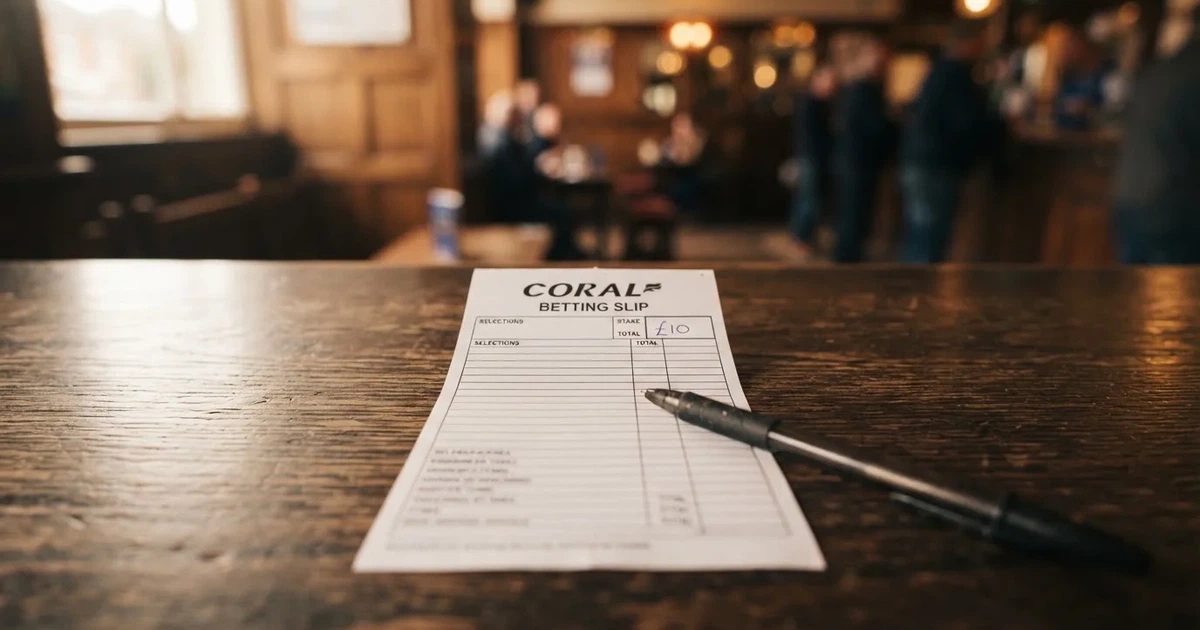


Best Bets for Today in New Zealand: A Punter’s Guide to Reading Form, Value and the Odds That Pay
 Available in US
Last verified 26 October 2026 against the Department of Internal Affairs’ published statements and TAB NZ’s own terms. Numbers and licence positions reflect what those sources said on the dates given in the body.

The phrase “best bets for today” sounds like a tip sheet. It isn’t — not for anyone who wants to keep their bankroll intact. Behind every “best bet” lies a chain of choices a punter makes before a ball is kicked or a barrier crashes open: what to study, what to ignore, what price to accept, what size to stake, and when to walk away. The legal side of New Zealand betting sharpens that chain further, because since 28 June 2025 there is effectively one set of betting-shop doors in the country: TAB NZ and its online sister brand Betcha. Everything else flows from that.
This page walks a NZ punter through the work that produces a bet worth taking — the fundamentals underneath the tip, the strategy on top of them, the law that decides where the bet may be placed, and the responsibility that sits on the person placing it. No picks, predicted scorelines or “guaranteed” tips appear here, because nobody can guarantee an outcome and any page that claims to has stopped being a guide.
Table of Contents
- How a Prediction Is Actually Built: Fundamentals Before the Tip
- Strategy on Top of the Fundamentals: Bankroll, Staking and Discipline
- Where New Zealand Punters May Lawfully Bet: The Landscape After 28 June 2025
- Responsible Gambling: The Safeguards a NZ Punter Should Use
- The Reviewed Bookmakers
- The Bookmaker’s Margin — And What It Costs the Punter
- A Worked Margin for an Illustrative Two-Way Market
- Frequently Asked Questions
How a Prediction Is Actually Built: Fundamentals Before the Tip
Form, Statistics and Line-ups: What the Punter Reads First
A prediction in horse racing starts with form — the recent runs of the horse, the going underfoot, the distance suitability, the barrier draw, the jockey and trainer combination, and whether the campaign is being aimed at this race or used as a hard hit-out. Racing form is dense because races have many moving parts; even a two-year-old’s debut run can carry clues in sectional times and the way the jockey handled the horse late.

A prediction in team sports starts with line-ups, recent results, head-to-heads and the venue. A football match prediction leans on expected goals, shots on target, possession in dangerous areas, set-piece threat and the line a manager picks. A rugby union or rugby league prediction leans on set-piece quality, kicking game, injury lists, and the conditions at the ground. A basketball or baseball prediction leans on pace, rest days, starting pitcher match-ups and back-to-back scheduling.
What unites these is that the punter is not really predicting an outcome. They are weighing factors they understand against factors the bookmaker has already priced in. The punter’s job is to find a price that does not reflect everything the market already knows.
Reading the Market’s Odds Before Reading the Tipster
A tip without a price is half a thought. Decimal odds of $2.10 imply the bet wins about 47 to 48 per cent of the time for the bookmaker to break even, before margin — and that 47 to 48 per cent is the market’s view of the event, not the punter’s. Two prices on the same runner, one at $2.10 and one at $2.40, are not the same bet at the same confidence. The punter’s question is whether their own probability estimate is higher than the price implies, and by how much. That gap is value.

The bookmaker’s margin sits inside every price. On a two-way market at decimal odds 1.90 and 1.90, the payout share comes to 1 ÷ (1/1.90 + 1/1.90), which works out to about 95 per cent of every dollar staked returned to punters in the long run and a margin of roughly 5 per cent kept by the bookmaker. On a three-way market — win, draw, lose — the margin typically sits between 5 and 8 per cent depending on the league and the event. On exotic racing pools like the Trifecta or First Four, retain rates run much higher because the bettor is selecting multiple runners in order; that is the trade the punter accepts for the chance of a large dividend.
No Tip Is Ever Certain
Every prediction is a probability, not a fact. Even a strong favourite at $1.30 loses roughly one race in four or five; a short-priced favourite at $1.10 loses roughly one race in eleven. The bookmaker’s margin only sharpens this — at $1.30 with a margin, the implied probability is closer to 74 per cent than the naive 77 per cent, and the punter must beat that, not match it, to make money over time. Anything that promises certainty is selling something that does not exist.
Strategy on Top of the Fundamentals: Bankroll, Staking and Discipline
Value, Not the Tip, Is What Makes Money
A value bet is one where the punter’s own probability estimate is higher than the price implies, after the bookmaker’s margin. The discipline is not “find winners” — most punters find roughly the same share of winners as the market does — but “find prices that misread the event”. That requires restraint. A $3.00 bet that looks generous but the punter cannot defend with reasons is a bet they should not place.
The corollary is that a tip can be right and still lose money. If the backer takes a $1.50 quote on a horse they think is 60 per cent to win, the implied probability is 66.7 per cent and the bet is negative value. If the horse wins, the punter is ahead on that single bet; over a season of similar bets, the bookmaker’s margin grinds them down.
Bankroll Discipline: The Stake Comes From the Plan, Not the Mood
Bankroll discipline means staking a fixed percentage of a defined bank — often one to three per cent per bet — and not chasing losses. A punter who doubles the stake after a loss to “get back even” is no longer betting; they are paying a panic tax to variance. The same rule applies to a winning streak: the punter does not stake ten per cent because the bank has grown; the unit stays anchored.
The staking plan does not predict a winner either. It predicts the punter’s ability to absorb a bad run. Even a sharp punter at 55 per cent winners at $2.00 average odds will see a run of ten losers in a row at some point in a season — that is variance, not failure, and the staking plan is what keeps the bank alive long enough for the edge to play out.
The Honest Limits of a Tipster Service
A tipster who claims a 70 per cent strike rate at average odds of $1.50 has, after margin, an edge of roughly minus nine per cent — the punter loses money following them. A tipster who claims a 30 per cent strike rate at average odds of $4.50 has, before margin, an edge of about 35 per cent — that is plausible, not impossible, but rare, and worth verifying over hundreds of bets, not dozens. Free tips carry no accountability; paid tips carry the tipster’s reputation but not the punter’s losses.
The punter who wants to follow a tipster should record every tip, the price taken, the result, and the running bank. After 200 to 300 bets, the tipster’s edge — or the absence of one — shows in the numbers.
What “Today’s Best Bets” Cannot Tell You
A “best bet for today” page cannot tell a NZ punter what to back, because no one can. It can tell the punter what to check before they back: the price, the margin, the form, the line-up, the conditions, and whether the bet fits the staking plan. The rest is the punter’s own judgement, the market’s own odds, and a bookmaker’s margin that does not care which way the bet runs.
Where New Zealand Punters May Lawfully Bet: The Landscape After 28 June 2025
TAB NZ and Betcha: The Two Lawful Online Brands
Since section 74AAA of the Racing Industry Act 2020 took effect on 28 June 2025, TAB NZ and its online sister brand Betcha are the only operators allowed to take online sports and racing bets from people in New Zealand. The Department of Internal Affairs told unlicensed providers serving New Zealand to withdraw with immediate effect. There is no licence register for bookmakers, because there is only this one lawful provider.
TAB NZ itself runs the retail TAB outlets, the TAB app and the Betcha app. The two are partners under a 25-year agreement signed in 2023 with Entain, which runs the betting business and shares gross profits with TAB NZ on a 50/50 basis, with at least NZ$150 million a year going to TAB NZ for the first five years. Entain pledged a one-off NZ$100 million payment to the racing sector as part of that deal.
Betcha is not a rival bookmaker. It is the online brand aimed at a younger, app-first punter — daily odds boosts and insurance tools in a “Toolbox”, a “Bet Social” section for sharing bets and pools, a “Playbook” with match analysis, and a Multi Builder that handles multis and Same Game Multis from a single event. TAB and Betcha are one operator group, presented differently.
What May Be Bet On
TAB NZ takes fixed-odds bets and tote (pool) bets. Its published betting rules cover Win, Place, Each Way, Quinella, Exacta, Trifecta, First Four, Double, Treble, Daily Double, Running Double, Quaddie and Big6, plus Multis and Same Game Multis. Racing covers thoroughbred, harness and greyhound codes; greyhound racing is closing in stages from 1 August 2026, after which offshore operators may not take bets on greyhound races from NZ customers either. Live betting is listed in the TAB NZ apps; any statutory restriction on in-play markets is not established. There is no lawful NZ betting exchange and spread betting sits outside its sports-betting definition. Bets on politics and novelty markets are not established under the framework.
What Offshore Brands Are Doing Here
International bookmakers continue to surface for NZ punters — LegendPlay, Glorion, 22Bet, Alawin, Spinbara, Millioner, Rooster.bet, BigClash and others. Each names a licence somewhere — Anjouan, Curaçao, Tobique, Comoros — but none of those licences gives the operator a right to take bets from people in New Zealand. The Department of Internal Affairs warned that overseas operators may be in jurisdictions with minimal consumer safeguards, may not return unspent credits and may not pay out large wins. There is no New Zealand complaints route or harm-minimisation framework that reaches them. TAB NZ accounts, by contrast, sit inside New Zealand law, with New Zealand ID verification and a New Zealand dispute pathway.
The point-of-consumption charge on offshore racing and sports bets ceased on 30 June 2026. The 12 per cent online gambling duty on overseas operators supplying NZ residents (in force from 1 July 2024) steps up to 16 per cent from 1 January 2027. A duty being payable does not make an offer lawful — the prohibition under section 74AAA stands regardless.
Tax and Player Position
Recreational gambling winnings in New Zealand are generally not taxable, and prize money from TAB horse, dog and trotting races is not taxable. A person who bets as a business is a different case; the Inland Revenue treats that as income, and the page makes no attempt at personal tax advice. On the player side, section 19(4) of the Gambling Act 2003 (inserted in 2025) says an individual may not be convicted for placing a bet with an offshore betting operator in breach of section 74AAA — no published penalty for a player was found. The law targets the operator, not the punter, but the DIA’s warnings about unspent credits and unpaid winnings are the practical risk the punter accepts by going offshore.
Responsible Gambling: The Safeguards a NZ Punter Should Use
The Tools TAB NZ Builds In
The TAB NZ app provides deposit limits, time-outs and self-exclusion. An exclusion applies across both TAB and Betcha because both sit on the same TAB NZ account infrastructure. The app carries a 17+ age rating while noting that customers must be 18 or over to bet; betting under 18 is an offence under section 89 of the Racing Industry Act 2020. TAB NZ accounts need a verified New Zealand address and ID.
The Helplines That Exist
The free Gambling Helpline (0800 654 655, text 8006) and Safer Gambling Aotearoa are the two routes a NZ punter or family member can use. TAB NZ itself lists both in its app. TAB NZ pays a Problem Gambling Levy of 0.74 per cent of its gross betting revenue (in force from 1 July 2025 to 30 June 2028), which funds harm-minimisation work across the sector.
What Responsible Gambling Looks Like in Practice
It looks like a staking plan the punter actually follows, a session length the punter sets before opening the app, a deposit limit that triggers a cooling-off before the next session, and an honest check on whether betting is paying for anything that should be paid for first. The page does not predict a winning day; it points at the tools a punter can use so that a losing day does not become a worse one.
The Reviewed Bookmakers
| Brand | New Zealand status | What the operator’s own terms state |
|---|---|---|
| TAB | TAB NZ brand — only lawful provider of racing and sports betting to people in New Zealand under section 74AAA of the Racing Industry Act 2020 | App covers horse, harness and greyhound racing, rugby union and rugby league and other sports pre and live; deposit limits, time-outs and self-exclusion; safer-gambling tools; 18+ to bet |
| Betcha | TAB NZ brand — only lawful provider of racing and sports betting to people in New Zealand under section 74AAA of the Racing Industry Act 2020 | Multi Builder for multis and Same Game Multis, daily Toolbox with odds boosts and insurance, Bet Social and Playbook; deposit limits and self-exclusion; 18+ to bet |
| LegendPlay | Not licensed in New Zealand — only TAB NZ may offer racing and sports betting to people in New Zealand; names an Anjouan licence that does not apply in NZ | Sportsbook has Sports, Live Betting and Virtual Sports sections; football, tennis, basketball and ice hockey listed |
| Glorion | Not licensed in New Zealand — only TAB NZ may offer racing and sports betting to people in New Zealand; names no licence that applies in NZ | Pre-match and live betting, virtual sports, horse racing and esports; popular, niche, indoor and outdoor sports plus entertainment events such as award shows and elections |
| 22Bet | Not licensed in New Zealand — only TAB NZ may offer racing and sports betting to people in New Zealand; Curaçao licence 8048/JAZ does not apply in NZ | Single bets, accumulators, systems and chains; live betting with real-time odds and score updates |
| Alawin | Not licensed in New Zealand — only TAB NZ may offer racing and sports betting to people in New Zealand; names no licence that applies in NZ | Football, tennis, table tennis, basketball, ice hockey, American football and baseball; Live Betting, Virtual Sports and esports |
| Spinbara | Not licensed in New Zealand — only TAB NZ may offer racing and sports betting to people in New Zealand; names no licence that applies in NZ | Casino terms name a single New Zealand game restriction (a video slot); the site itself is not licensed to take bets from NZ |
| Millioner | Not licensed in New Zealand — only TAB NZ may offer racing and sports betting to people in New Zealand; names no licence that applies in NZ | Pre-match and live events on football, tennis, table tennis, basketball, ice hockey, American football and baseball; separate Live Betting and Virtual Sports |
| Rooster.bet | Not licensed in New Zealand — only TAB NZ may offer racing and sports betting to people in New Zealand; Tobique licence No. 0000002 does not apply in NZ | Live, Sports Promotions, Results, Schedule, E-sports and Predictions sections; six odds formats |
| BigClash | Not licensed in New Zealand — only TAB NZ may offer racing and sports betting to people in New Zealand; Curaçao licence 8048/JAZ does not apply in NZ | Pre-match and live sports betting across international and local leagues; virtual sports and esports betting on FPS and MOBA titles |
TAB — The Only Lawful Online Bookmaker in New Zealand
TAB sits at the centre of the NZ market because it is the market. Racing coverage runs through thoroughbred, harness and greyhound meetings with Win, Place, Each Way, Quinella, Exacta, Trifecta, First Four, Double, Treble, Daily Double, Running Double, Quaddie and Big6. The app carries Trackside live race streaming with in-app betting, racing form, Blackbook and Jockey Challenge tools, and a simplified wallet for deposits and withdrawals. Safer-gambling tools — deposit limits, time-outs, self-exclusion — sit inside the account.
For a NZ punter, TAB is the only place that takes the bet lawfully, offers NZ-resident harm minimisation, and routes disputes inside New Zealand. There is no second lawful bookmaker to compare it against, which is why the table lists offshore brands beside it — they exist in the punter’s world, not in the lawful market.
Betcha — The Same Operator in a Different Wrapper
Betcha is TAB NZ’s online brand aimed at a younger, app-first punter. The Multi Builder lets a punter build multis, copy trending multis and track live legs, with a new multi-grid that builds Same Game Multis from a single event. The daily Toolbox carries odds updates and insurance tools for bets that do not land. The Bet Social section lets punters chat, follow tipsters and share bets or pools. The Playbook carries tips and match analysis.
The terms are TAB NZ terms, the safer-gambling tools are TAB NZ tools, the exclusion covers both brands. For a NZ punter who wants the app-led experience, Betcha is the right door; for a NZ punter who wants the long-form racing product, TAB is. There is no value-shopping between them — they are the same bookmaker on the same licence.
LegendPlay — Not Licensed in New Zealand
LegendPlay’s sportsbook has Sports, Live Betting and Virtual Sports sections, with football, tennis, basketball and ice hockey listed. The brand names an Anjouan Gaming Authority licence, which gives no right to take bets from people in New Zealand. There is no NZ complaints route and no harm-minimisation framework that reaches it.
For a NZ punter, LegendPlay is one of the international sites that surface in search results. It offers markets the TAB does not always price, but accepts bets from NZ in breach of section 74AAA. The DIA’s warning — minimal consumer safeguards, possible non-return of unspent credits, possible non-payment of large wins — is the operating reality.
Glorion — Not Licensed in New Zealand
Glorion offers pre-match and live betting, virtual sports, horse racing and esports, with markets grouped into popular, niche, indoor and outdoor sports plus entertainment events such as award shows and elections. The brand names no licence that applies in New Zealand, and no NZ complaints route or harm-minimisation framework reaches it. Support is by Live Chat or email; the site accepts customers over 18 years of age only.
The breadth of markets — including novelty markets like award shows and elections — is what draws a punter to a site like Glorion. The breadth is also what makes it a poor fit for a NZ punter looking for consumer protection, because the site is not licensed to take bets from NZ at all.
22Bet — Not Licensed in New Zealand
22Bet takes single bets, accumulators, systems and chains, and offers live betting with real-time odds and score updates. The brand names a Curaçao licence (8048/JAZ), held by TechSolutions Group N.V., which gives no right to take bets from people in New Zealand. No NZ complaints route or harm-minimisation framework reaches it.
22Bet’s accumulator-heavy product is a particular kind of book — the punter stacks legs and the bookmaker multiplies the odds, but each leg carries the same margin as a single bet and the punter must beat every leg, not most of them, to win. That product is the kind of thing a NZ punter will see if they search for accumulators; it is not the kind of thing a NZ punter can lawfully use from inside New Zealand.
Alawin — Not Licensed in New Zealand
Alawin’s sportsbook covers football, tennis, table tennis, basketball, ice hockey, American football and baseball, with Live Betting, Virtual Sports and esports also offered. The brand names no licence that applies in New Zealand. No NZ complaints route or harm-minimisation framework reaches it.
For a NZ punter who follows American leagues — NBA basketball, MLB baseball, NFL American football — Alawin is one of the sites that surfaces. The breadth of US sport is real; the lawful status is not.
Spinbara — Not Licensed in New Zealand
Spinbara’s terms name a single New Zealand restriction — a Planet of the Apes video slot is unavailable — but the site itself is not licensed to take bets from NZ. That single-line NZ reference is a casino-game carve-out, not a sign the operator holds a NZ licence for betting.
The point matters because the operator’s own terms are the only place a restriction is named in writing. A NZ punter who reads only the terms will not find a betting licence; they will find a casino carve-out. The site’s status under section 74AAA is unchanged — unlawful for the operator to serve NZ, no NZ complaints route.
Millioner — Not Licensed in New Zealand
Millioner’s sportsbook offers pre-match and live events on football, tennis, table tennis, basketball, ice hockey, American football and baseball, with separate Live Betting and Virtual Sports sections.
The product mix is similar to Alawin’s — broad international sport, plus virtuals. The lawful status is identical to every other offshore brand on this list.
Rooster.bet — Not Licensed in New Zealand
Rooster.bet’s sportsbook has Live, Sports Promotions, Results, Schedule, E-sports and Predictions sections and shows odds in six formats. The brand names a Tobique Gaming Commission e-gaming licence (No. 0000002), held by Novatrix SRL, which gives no right to take bets from people in New Zealand.
The Predictions section is the marketing hook — punters see “predictions” and assume an analytical product. What they get is the site’s own take, not an independent tipster service. The Tobique licence is real in the sense that Tobique issued it; it does not extend to NZ customers.
BigClash — Not Licensed in New Zealand
BigClash offers pre-match and live sports betting across international and local leagues, plus virtual sports and esports betting on FPS and MOBA titles. The brand names a Curaçao licence (8048/JAZ), which gives no right to take bets from people in New Zealand.
The esports book — FPS and MOBA titles — is what sets BigClash apart in this set. For a NZ punter who follows esports, BigClash is one of the sites that price the markets; for the same reason as every other offshore brand, it is unlawful for the operator to serve NZ, and the punter takes the risk.
The Bookmaker’s Margin — And What It Costs the Punter
The Margin Is Already in the Price
On a two-way market at decimal odds 1.90 and 1.90, the payout share works out to roughly 95 per cent — 1 ÷ (1/1.90 + 1/1.90) — and the margin to roughly 5 per cent kept by the bookmaker. Over hundreds of bets at the same margin, the punter needs to beat that 5 per cent on every dollar staked just to break even. On a three-way market — win, draw, lose — the margin typically runs higher, between 5 and 8 per cent depending on the league. On exotic racing pools like Trifecta or First Four, retain rates are much higher; that is the trade for the chance of a large dividend.
The margin is the bookmaker’s edge. The punter’s edge is whatever their own probability estimate adds on top — and the smaller the margin, the smaller the edge the punter needs.
Why Smaller Margins Matter
A bookmaker quoting 1.95 / 1.95 on the same market is running a margin of roughly 2.6 per cent, against the 5 per cent of a book quoting 1.90 / 1.90. Over a season, that 2.4 percentage points of margin is the difference between a punter’s staking plan working and not working at the same hit rate. The punter cannot control the outcome; they can control which book they bet with.
TAB NZ’s margin varies by market and event — racing margins are not the same as sports margins, and exotic pools carry higher retain. The punter should know the margin on the market they bet on most; that number, more than any tip, decides whether the staking plan has a chance.
A Worked Margin for an Illustrative Two-Way Market
Take an illustrative two-way market at decimal odds 1.90 and 1.90. The payout share — the share of every dollar staked that would be returned to punters if the outcomes paid out at true probabilities — is 1 ÷ (1/1.90 + 1/1.90), which works out to roughly 95 per cent. The margin — the share kept by the bookmaker — is 1 minus that, or roughly 5 per cent. On an event-by-event basis, the margin may sit anywhere between about 2 and 8 per cent depending on the sport, the league and how the bookmaker wants to position the price; the 5 per cent band is a representative figure for a well-priced major-market two-way line, not a guaranteed figure for every event. The punter’s staking plan must clear that band over hundreds of bets to be in profit.
Frequently Asked Questions
What bets should I take today?
A “best bet” is a bet the punter can defend with reasons — form, line-up, conditions, market price — at a stake the staking plan allows. There is no universal list, because every punter’s bankroll, edge and tolerance for variance differ. The first move is to check the price the bookmaker is offering against the punter’s own probability estimate; if the price implies a higher probability than the punter can defend, the bet is not for them.
What is the betting line on the Super Bowl today?
The Super Bowl line — point spread, total, moneyline — opens in the days before the game and tightens as kick-off approaches. TAB NZ carries NFL markets in its app; the line shown in the TAB app is the line a NZ punter can lawfully take. Lines move with money and news, so the punter checking “today” should look at the live line in the TAB app, not a line published earlier in the week.
What is a value bet and why is no tip ever certain?
A value bet is one where the punter’s own probability estimate is higher than the price implies, after margin. No tip is certain because every prediction is a probability, not a fact — even a strong favourite at $1.30 loses roughly one race in four or five. The bookmaker’s margin only sharpens this: at $1.30, the implied probability is about 77 per cent, and the punter must beat that to make money over time.
What is the bookmaker’s margin and how can it be seen in the odds?
The margin is the share of every dollar staked that the bookmaker keeps. On a two-way market priced 1.90 on each side, the margin works out to roughly 5 per cent — the rest is what would be returned to punters in the long run. The punter can compare margins across bookmakers by looking at the same event at two sites; the lower the margin, the smaller the edge the punter needs.
How is the return on a bet worked out from the stake and the odds?
For decimal odds, the return is stake × odds, and the net profit is stake × (odds − 1). A NZ$10 bet at $2.50 returns NZ$25 — NZ$10 stake plus NZ$15 profit. For a combination bet with three legs at $2.00, $3.00 and $1.50, the combined odds are $9.00 and the same NZ$10 stake returns NZ$90 — NZ$10 stake plus NZ$80 profit. The combined price carries the margin of every leg.
Which bookmaker may lawfully take sports and racing bets in New Zealand?
Since 28 June 2025, only TAB NZ and its online sister brand Betcha may lawfully take sports and racing bets from people in New Zealand, under section 74AAA of the Racing Industry Act 2020. There is no licence register for bookmakers because there is only this one lawful provider. Offshore brands — LegendPlay, Glorion, 22Bet, Alawin, Spinbara, Millioner, Rooster.bet, BigClash and others — name licences in Anjouan, Curaçao, Tobique and Comoros, none of which applies in New Zealand.
Prepared by the Nzsitereviews editorial staff.